lego buying limits
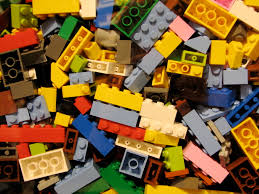
Ai Weiwei had recently accused Lego of “censorship and discrimination” after the company refused to sell bricks to him for a 2015 exhibition. And according to BBC’s Celia Hatton, it was a controversial move given that “Ai Weiwei had used Lego before. He created a series of portraits of political dissidents that appeared at an exhibition in Alcatraz prison in 2014.” But after people from across the globe donated lego to the artist, Lego “adjusted” its bulk buy guidelines. “Previously, when asked to sell very large quantities of Lego bricks for projects, the Lego Group has asked about the thematic purpose of the project,” its most recent statement said. “This has been done as the purpose of the Lego Group is to inspire children through creative play, not to actively support or endorse specific agendas of individuals or organisations. “However, those guidelines could result in misunderstandings or be perceived as inconsistent, and the Lego Group has therefore adjusted the guidelines for sales of Lego bricks in very large quantities.”

Now, customers who intend to display Lego creations in public will be asked to make it clear that the company does not support or endorse the specific projects.
buy lego curiosity rover This led to the BBC taking a closer look at why certain companies limited how much consumers purchased, with many giving the same answer.
cheap cool lego sets Luxury retailer LVMH has had its Chinese business undermined by bulk sales ferried into the country by so-called “daigou” agents, according to the BBC.
buy lego dinoIt suggested that taxes and currency differences made luxury goods expensive in China, which in turn made daigou agents buy up luxury products in bulk in Europe and sell them on at home.
buy lego pilot Jean-Jacques Guiony, CFO of LVMH, said: “We’ve placed strict retail restrictions for the amount of products that people can buy.
target lego buy oneBut, when you see someone in a store, you don’t know whether they are buying handbags for themselves or to sell them on to the market in China.
lego shop ontarioWe are trying to make sure we are not competing with our own products in the China market, but our actions are not entirely bullet-proof.” While most of the examples given by the BBC hail from China, The British Retail Consortium’s external affairs adviser, Bryan Johnston, claimed that the risk of selling to customers and having your products turn up in someone else’s store is always high when you sell in bulk. There are, however, ways to prevent this, he said. For example, restricting sales. He added: “In the end, it is up to the individual store.

It is in the gift of the retailer to decide on how much they want to sell to any one customer.” Share with your networkWhen Lego originally decided not to sell the Chinese artist Ai Weiwei bricks with which to make a political statement, it really thought it was doing the right thing.Its ethical policy states that any artwork using Lego products should not "contain any political, religious, racist, obscene or defaming statements".However, the Danish company was widely attacked by commentators and accused of not wishing to annoy the Chinese government, which Ai regularly criticises.Lego has now relented and on Wednesday announced that it had changed its policy. It will no longer ask customers what they want to use the bricks for, but requests that they make clear that the company does not support or endorse their projects, if exhibited in public. But should a business be picky about whom it sells to? The problem is that selling as much as you can to anyone and everyone can have unintended consequences.
Some customers can turn into your competitors. LVMH, which owns luxury brands from Christian Dior clothing to Dom Perignon champagne, has had its Chinese business undermined by bulk sales ferried into the country by so-called "daigou" agents. Taxes and currency differences make luxury goods far more expensive in China. Some analysts estimated that by mid-2015, Chinese prices were 60% higher than those in Europe. The daigou agents, many of them students making extra cash to finance their overseas studies, buy up luxury products in bulk in Europe and Hong Kong and sell them on at home. It is sometimes known as parallel trading.So LVMH started to watch its customers more closely. Speaking on a conference call earlier last year, Jean-Jacques Guiony, chief financial officer at LVMH, said: "We've placed strict retail restrictions for the amount of products that people can buy."But, when you see someone in a store, you don't know whether they are buying handbags for themselves or to sell them on to the market in China.
We are trying to make sure we are not competing with our own products in the China market, but our actions are not entirely bullet-proof."Other companies have found it easier to try to equalise prices. The fashion house Chanel raised its European prices by 20% and cut them in China, directly competing with the daigou agents and successfully eroding their profit margins.This kind of grey market happens everywhere. A supermarket might halve the price of a box of chocolates in a sale and sell them all to a single customer, only to see them turn up in the corner store down the road, undercutting their recommended retail price, a fortnight later.That's not illegal, but there are ways to stop it - by restricting sales.The British Retail Consortium's external affairs adviser, Bryan Johnston, says: "In the end, it is up to the individual store. It is in the gift of the retailer to decide on how much they want to sell to any one customer."Many supermarkets imposed restrictions two years ago when the scandal over contaminated baby milk in China prompted overseas Chinese to buy up formula and import it into China.
However, these were more to do with trying to stop a run on the product at home than trying to stop any kind of parallel trading abroad.But for some retailers more is, well, more. Marks and Spencer spokeswoman Clare Wilkes says: "A few years ago, a woman came into one of our stores and bought up the every piece of cashmere we had. We had no objection to that - at all."But the luxury goods industry on the whole is very choosey about whom it sells to. The most famous example is Burberry, which by 2006, when Angela Ahrendts became chief executive, was growing just 2% a year in a booming luxury market.It was selling everything from kilts to dog cover-ups and leashes - to everyone.Ms Ahrendts wrote later in the Harvard Business Review: "In luxury, ubiquity will kill you - it means you're not really luxury anymore. And we were becoming ubiquitous."Ms Ahrendts completely restructured the company, drastically reducing its product range, centralising production and design, making it more expensive and then, restricting the customer base.